
What Is Patient-Centered Communication? A Guide for Practices
Walk into any practice, and you can usually tell within a few minutes. Some places talk at patients. Others actually talk with them. That's patient-centered communication, in a nutshell.
It just means every conversation, message, or text is built around what the patient actually needs to know and decide, not what's quickest for the practice to send out. It's not about picking fancier words. It's about whether the patient leaves knowing what happens next.
None of this is brand new. Doctors and researchers have known for years that patients who feel heard stick with their treatment plans and trust their care team more. What's different now is that this has to happen everywhere, not just in the exam room. It shows up in reminder texts, portal messages, billing emails, basically every touchpoint a patient has with you.
Why This Matters More Than It Used To

Patients talk to their care team through more channels than ever now: phone, text, portal, email, in person.
Every one of those is a chance to either build trust or lose a little of it.
You can have the warmest provider in town and still lose patients if everything else feels cold or robotic.
Things like:
- A reminder text that reads as a machine wrote it
- A billing message stuffed with jargon
- A portal reply that misses the actual question
None of these feel huge on their own. But they add up fast, and they're what decide whether a patient feels like a person or just a chart number.
Get this right, and you'll see it in the numbers too: fewer no-shows, fewer "wait, what did you mean?" calls, and patients who stick around longer.
The Core Pieces
A handful of things keep showing up in practices that do this well:
Plain language. Medical terms have their place, but patients need words they can actually act on. "Your blood pressure's a little high" means a lot more to someone than a number and a code.
Actually listening. Let patients finish explaining what's wrong before jumping straight to a fix. That goes for the front desk too, not just the exam room.
Respecting where patients are coming from. Two people with the same diagnosis might need completely different conversations, depending on their background, health literacy, or what they're dealing with at home.
Staying consistent everywhere. A patient should get the same tone on the phone as they do in a text or a portal message. Nothing kills trust faster than one channel feeling warm and another feeling like a form letter.
Being on time. Patients shouldn't have to chase you down for test results or a billing answer. Going quiet, even by accident, reads as not caring.
What This Actually Looks Like

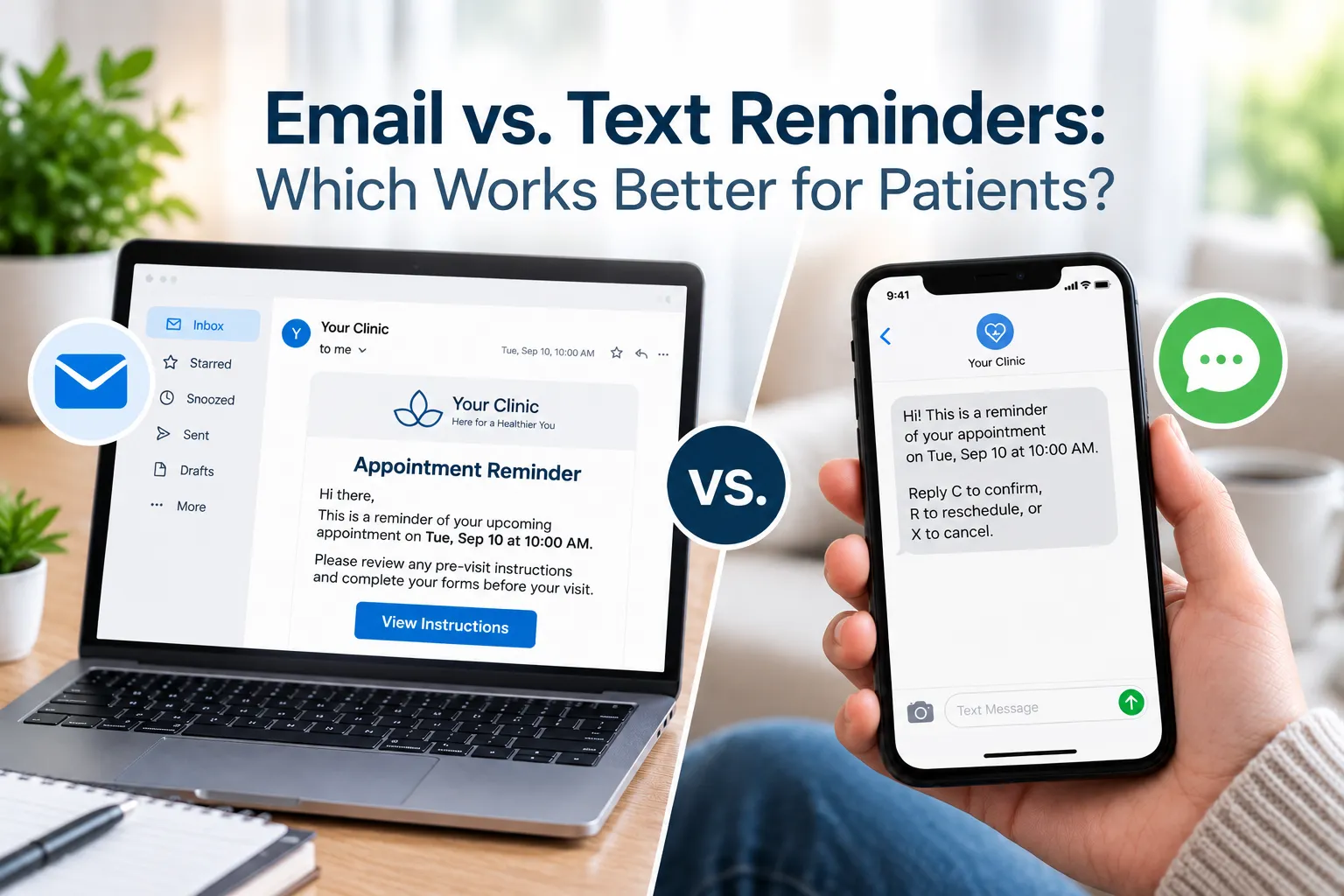
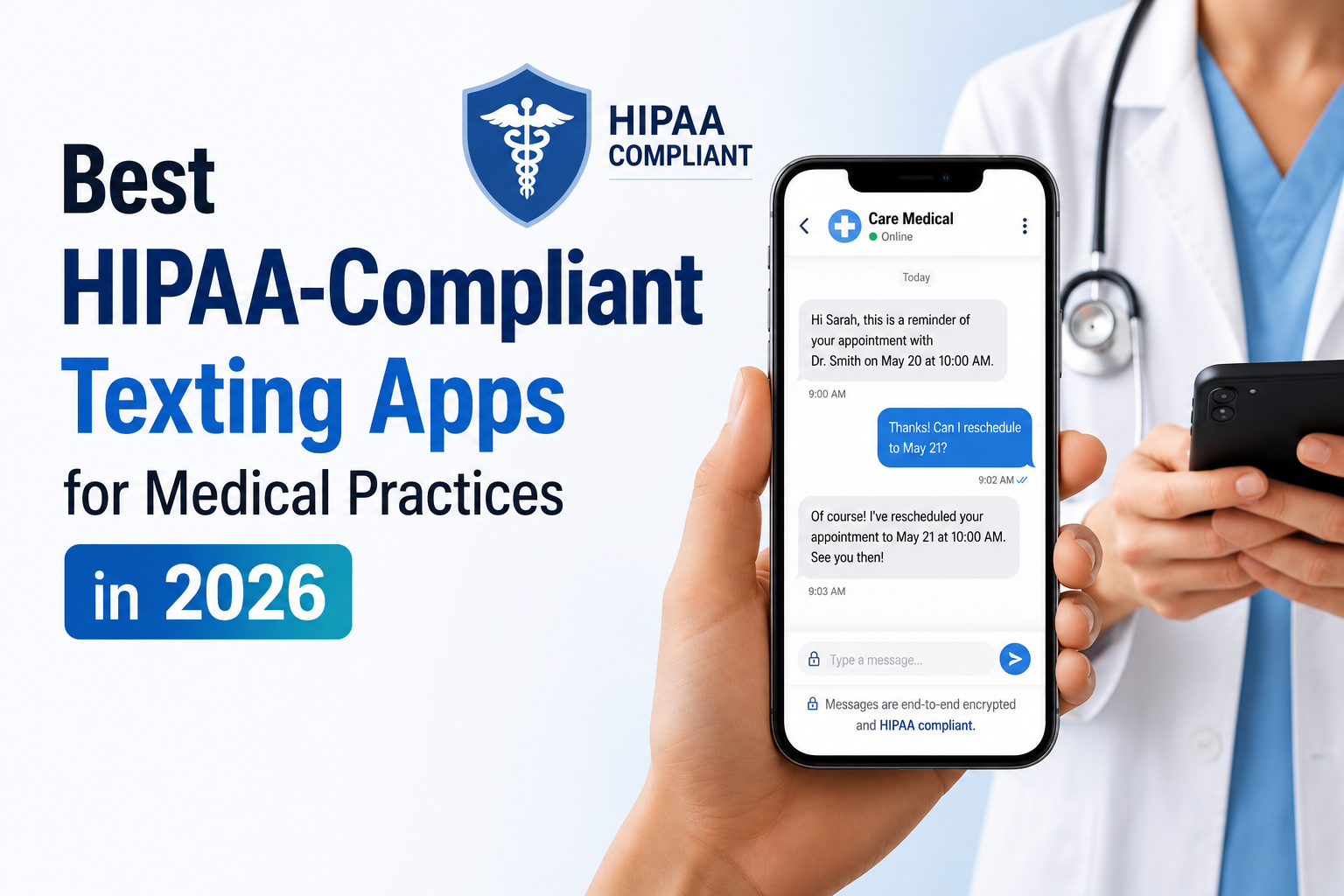
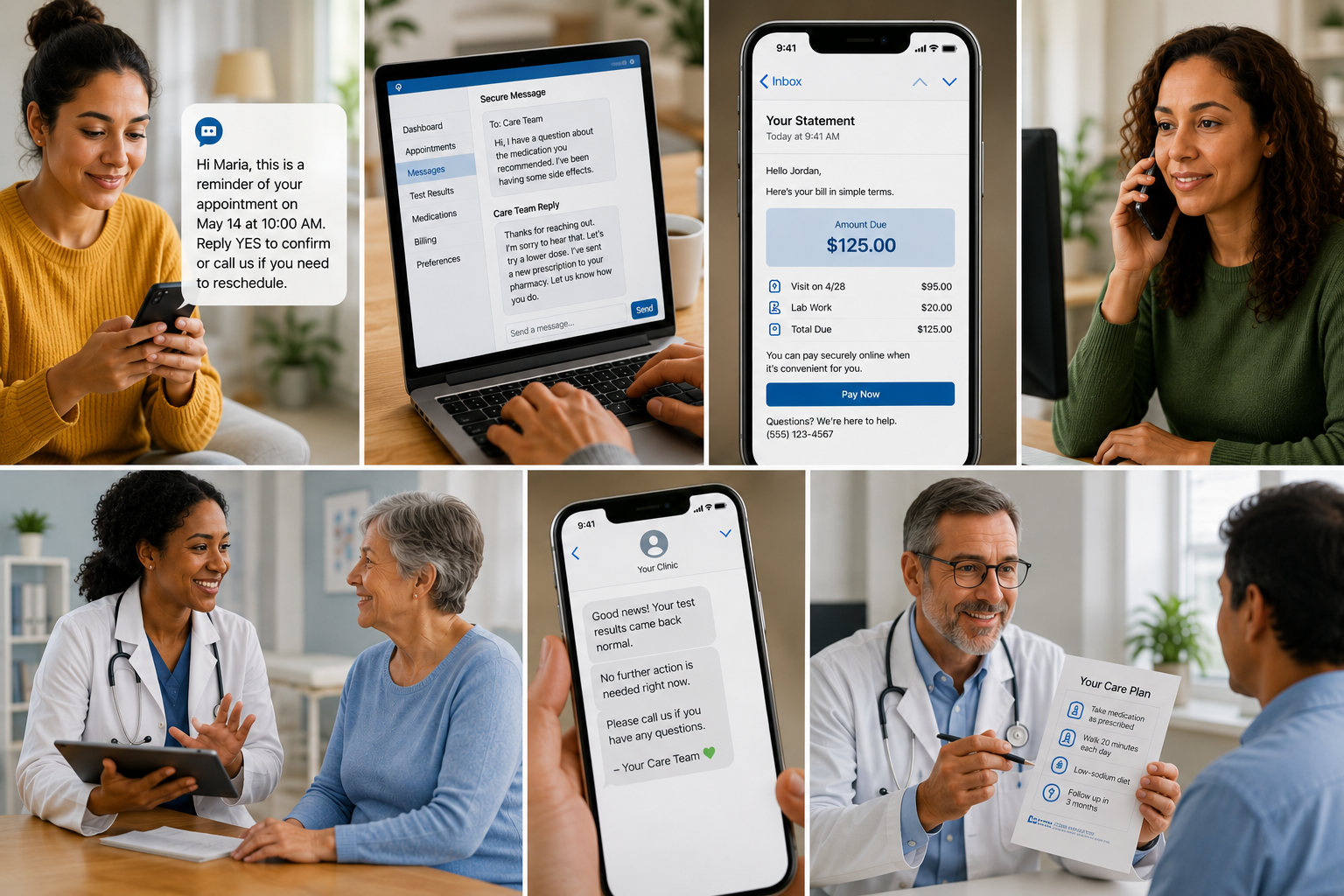
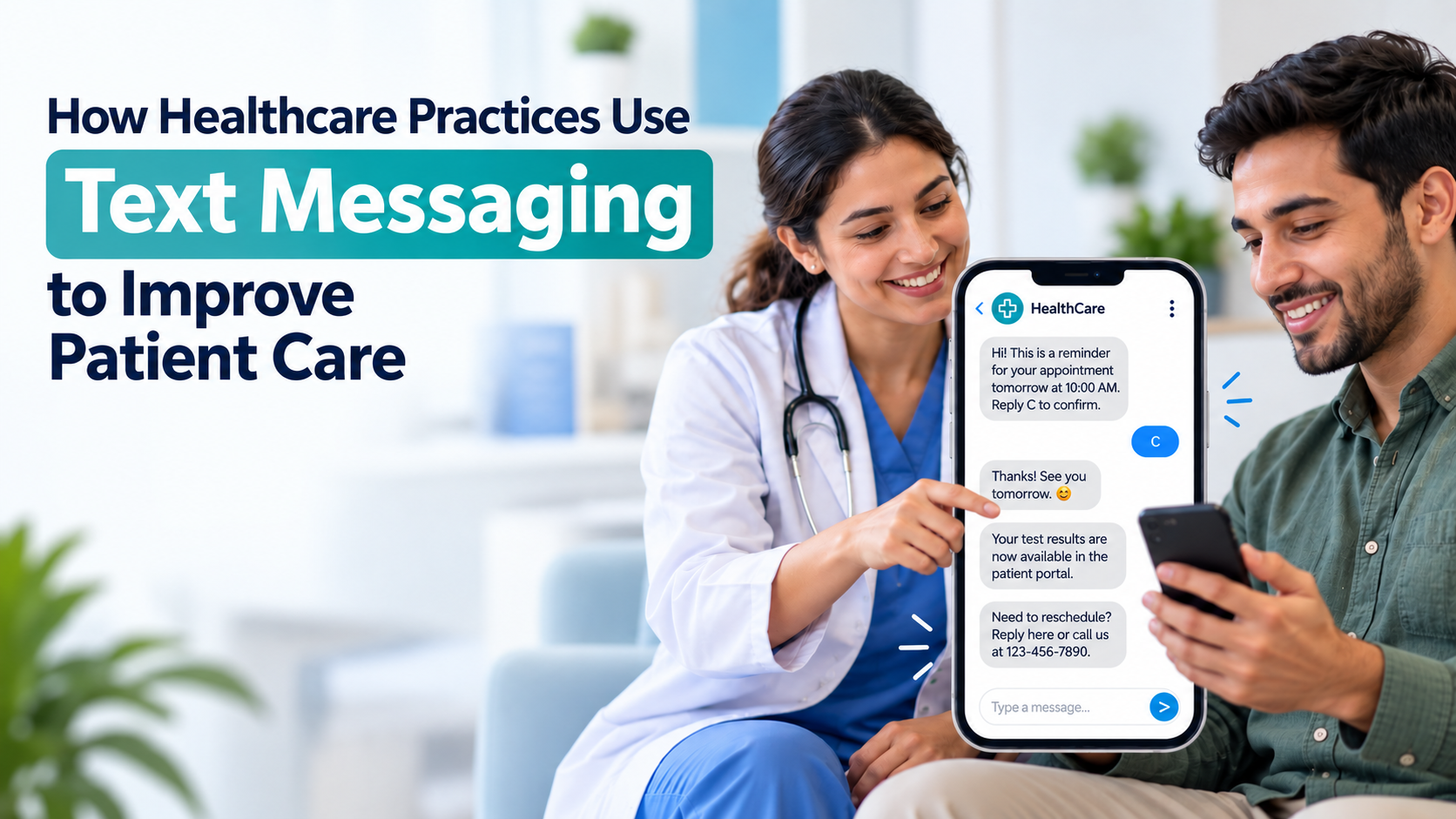
A text that says "Hi Maria, your appointment with Dr. Chen is tomorrow at 2 pm. Reply if you need to reschedule" does more for the relationship than any generic system alert ever will.
A two-way text where a patient can just ask a quick question before their visit saves everyone a phone call.
A follow-up message that checks how someone's actually doing, not just whether they paid their bill, tells a patient the relationship didn't end when they walked out the door.
This is where your tools matter. A provider can have great bedside manner, but if the reminders, intake forms, and messages behind the scenes are clunky or feel copy-pasted, all that goodwill gets undone before the patient even notices it happened on purpose.
Making It Part of How You Operate
Take an honest look at what patients actually get from you today:
- Do your reminders sound like a person wrote them?
- Can patients just reply to a text, or do they have to pick up the phone?
- Do your front desk and your clinical team sound like they're part of the same practice?
This isn't a script you hand out once. It has to run through scheduling, messaging, billing, and every patient conversation, consistently enough that patients notice, even if they couldn't tell you why.
Conclusion
It really comes down to one question: does this make it easier for the patient to understand their care, or is it just information passing from one side to the other? Practices that keep answering that question the right way build the kind of trust that shows up in real outcomes, not just a satisfaction survey.
SimpleChime helps practices connect with patients through simple, two-way texting, automated reminders, and patient-friendly communication.
See how
SimpleChime
can improve your patient experience.