
What Is a Patient No-Show? Causes and Practice Impact
Quick answer: A patient no-show is a scheduled appointment the patient misses without canceling or giving enough notice for the practice to fill the slot. Each practice sets its own cutoff in its cancellation policy. Many use 24 hours, so a cancellation inside that window often counts as a no-show.
Key takeaways
- Your cancellation policy decides what counts as a no-show, so two practices can count the same missed visit differently.
- Several common causes sit on the practice side, like hard-to-reach phone lines and reminders patients can't answer.
- You can estimate what no-shows cost you using three numbers you already track.
What Is a Patient No-Show?

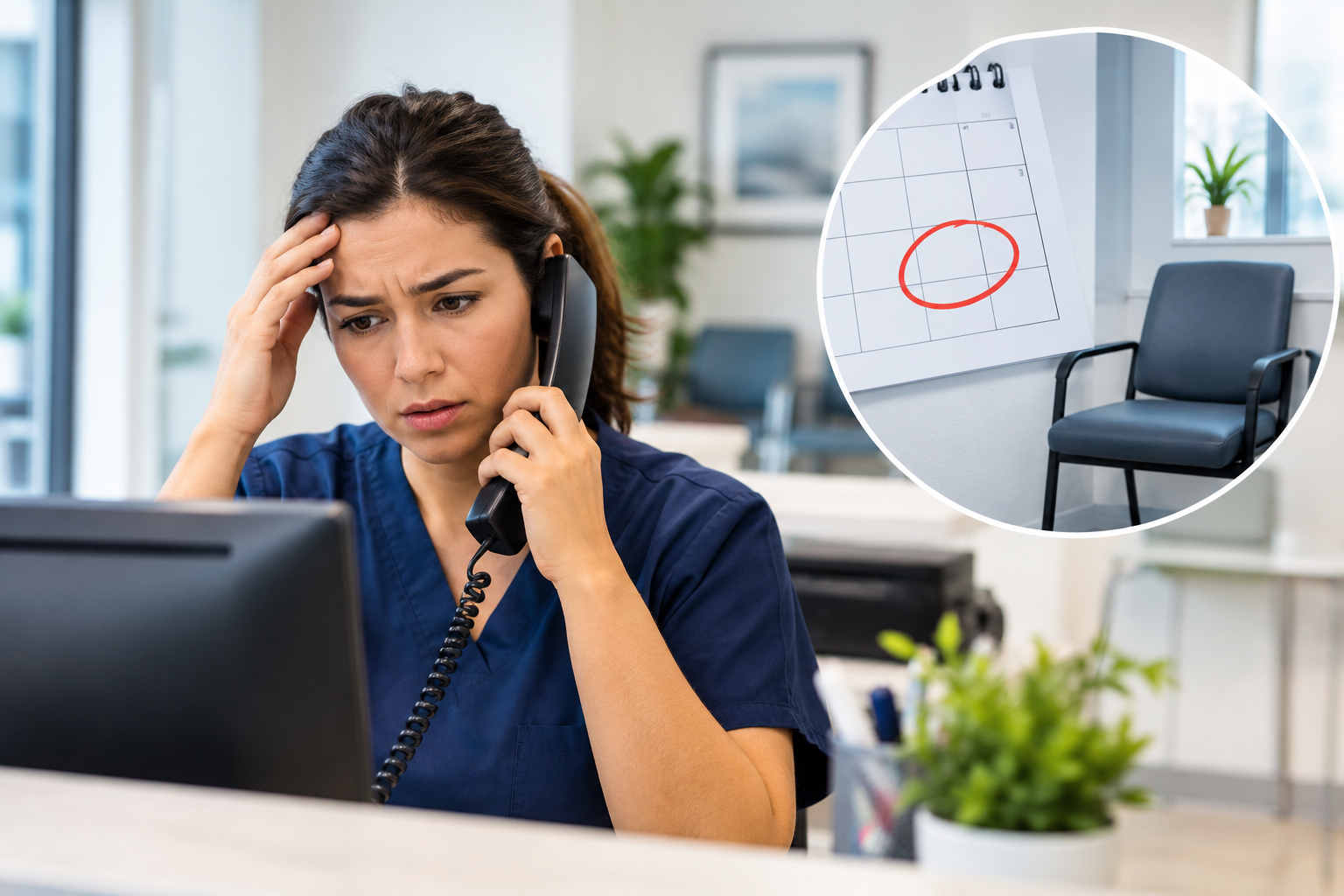
A patient no-show happens when someone books a visit and doesn't arrive, without telling the practice in time. The result is an empty slot that's too late to give to anyone else.
Where a cancellation ends and a no-show begins is your call. The notice window in your cancellation policy sets that line.
No-Show vs. Late Cancellation vs. Cancelled Appointment
| Type | What happened | Notice given | Can the slot be refilled? |
|---|---|---|---|
| No-show | Patient doesn't arrive or call | None | No |
| Late cancellation | Patient cancels inside your policy window | Less than your cutoff | Sometimes, with a waitlist |
| Cancelled appointment | Patient cancels before the cutoff | More than your cutoff | Usually |
How Common Are Patient No-Shows?
There's no single benchmark that fits every practice. No-show rates swing widely by specialty, patient population, visit type and how far ahead appointments are booked. A dental hygiene visit booked six months out and a recurring weekly therapy session will behave very differently from a same-week sick visit.
No-shows are edging up. In an August 2026 MGMA Stat poll of 190 medical groups, 32% reported higher no-show rates than in 2025, 58% said rates were about the same, and 10% saw a decrease (MGMA). That’s up from 27% reporting increases in MGMA’s August 2025 poll, when practices that held steady or improved most often credited consistent patient communication, especially digital reminders (MGMA).
That makes your own rate, tracked over time, the most useful number to watch.
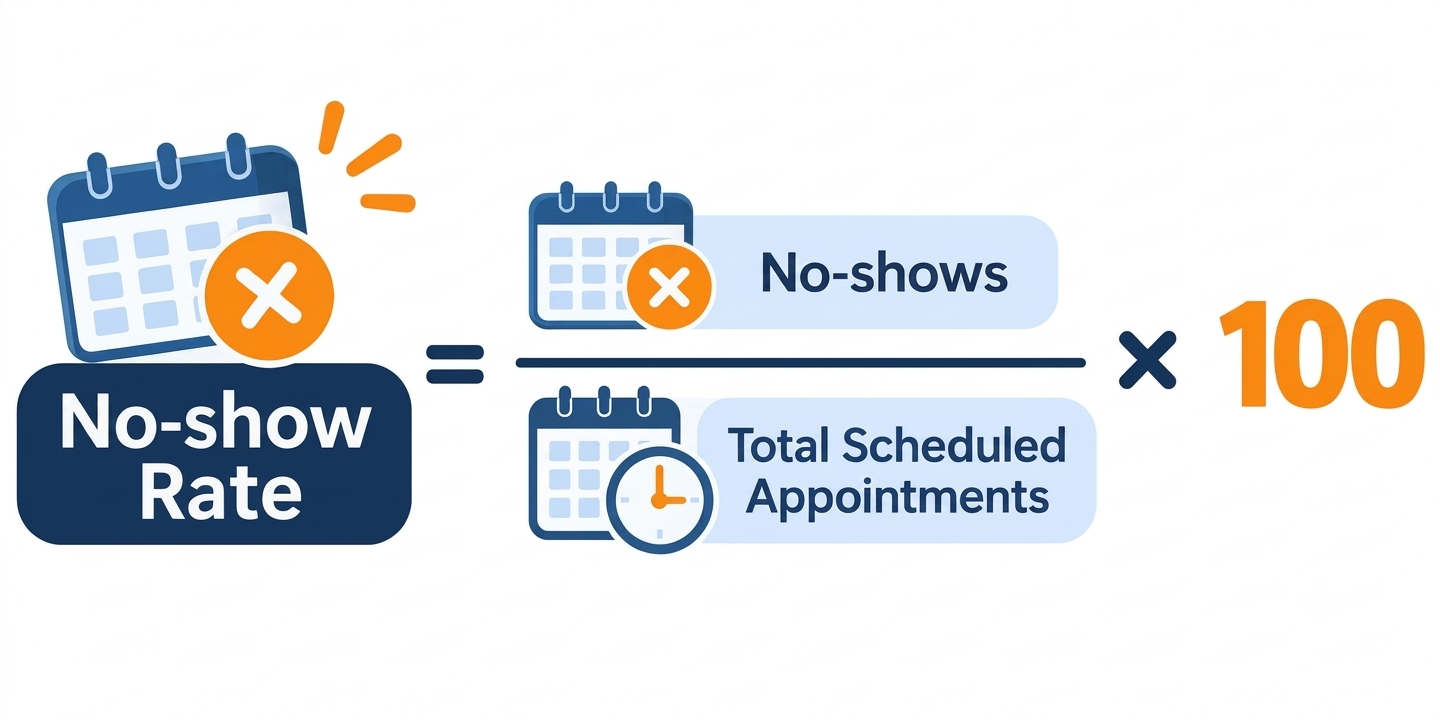
How to Calculate Your No-Show Rate

If your practice had 40 no-shows out of 500 scheduled appointments last month, your no-show rate is 8%.
A few habits make the number more useful:
- Break it down by provider, day of the week, and visit type. Patterns show up fast.
- Decide once whether late cancellations count as no-shows, then stick to that rule so months stay comparable.
Why Do Patients No-Show for Appointments?

Most patients don't skip on purpose. No-shows usually come from life getting in the way, plus friction in how the practice handles scheduling.
Patient-Side Causes
On the patient side, the usual reasons are forgetting the appointment, transportation problems, work shifts that changed, no childcare, and worry about what the visit will cost. Some patients start feeling better and decide they don't need to come. Others feel anxious about the visit itself and avoid it.
Practice-Side Causes You Can Control
This is where most practices have room to improve:
- Long lead times. The further out a visit is booked, the more time there is to forget or for plans to change.
- Phone lines patients can't get through. A patient who wants to cancel at 7 p.m., or who hits a busy signal at lunch, often just doesn't show.
- One-way reminders. A reminder that says "call us to reschedule" adds a step many patients won't take.
- Phone-only rescheduling. If moving a visit means calling during business hours, some patients will skip it instead.
The common thread is simple. When canceling takes more effort than not showing up, some patients won't show up.
Which Patients Are Most Likely to Miss?
Your own data is the best guide. Look at patients with past no-shows, visits booked weeks out, and time slots that miss more often, then use those patterns to plan extra reminders.
How Do No-Shows Impact Your Practice?
Lost Revenue
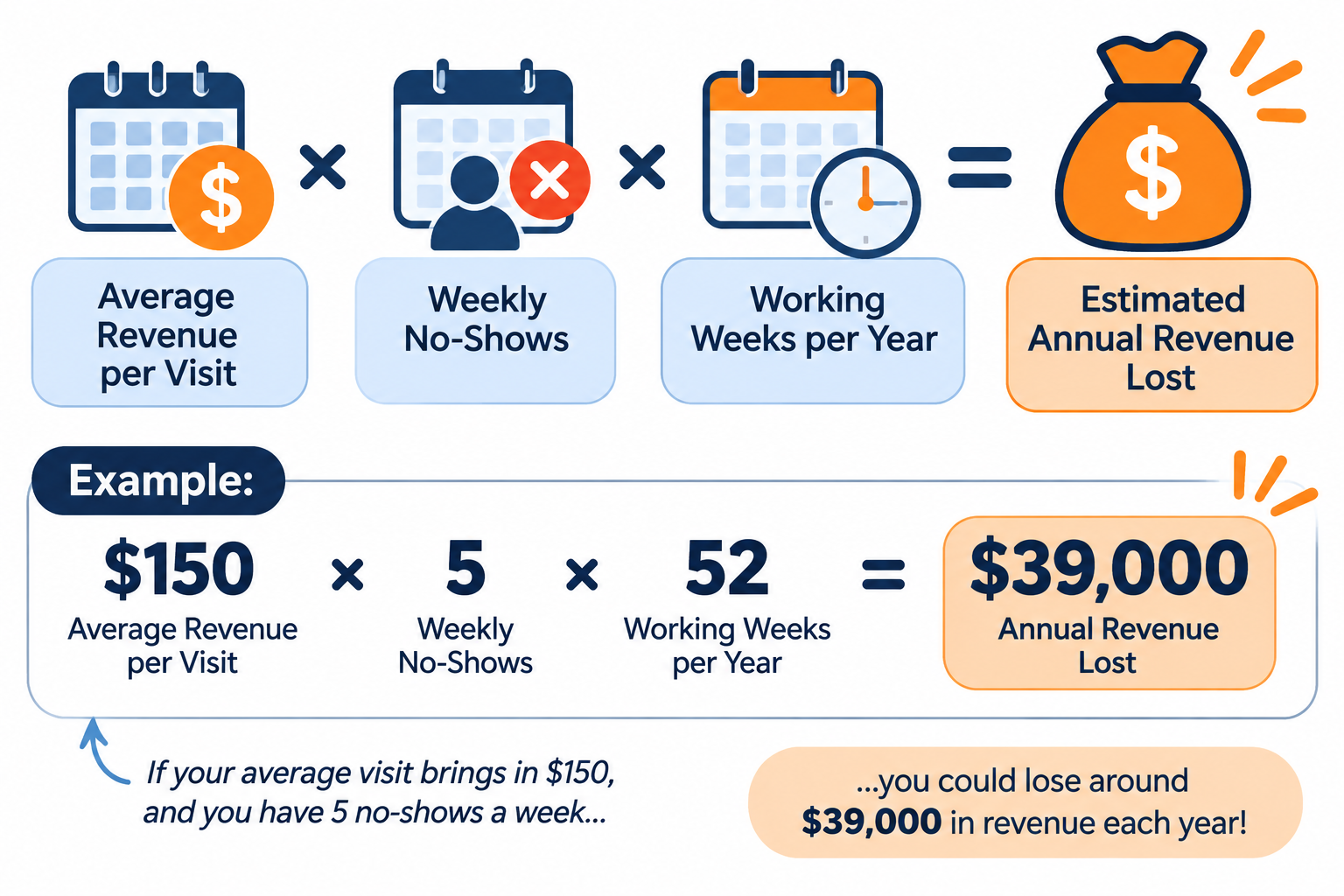
Every no-show is a visit you staffed for but can't bill. Estimate the yearly cost with this worksheet:

For example, $120 per visit × 6 no-shows a week × 48 weeks comes to $34,560 a year. Swap in your own numbers.
Extra Work for Your Front Desk
Each no-show means calling the patient, rebooking, adding chart notes, and refilling the slot on short notice.
Longer Waits for Other Patients
When no-shows pile up, patients who could have used those slots wait longer to be seen.
Gaps in Patient Care
A missed follow-up can delay a medication change, a test result review, or ongoing treatment. For patients with long-term conditions, those delays add up.
Patient Churn
A missed visit with no follow-up can quietly turn into a lapsed patient, and your patient attrition rate creeps up without anyone noticing.
How SimpleChime Helps Patients Cancel or Reschedule Instead of No-Showing
Many no-shows come down to one thing: the patient had no easy way to tell you they couldn't make it. SimpleChime gives them a few.
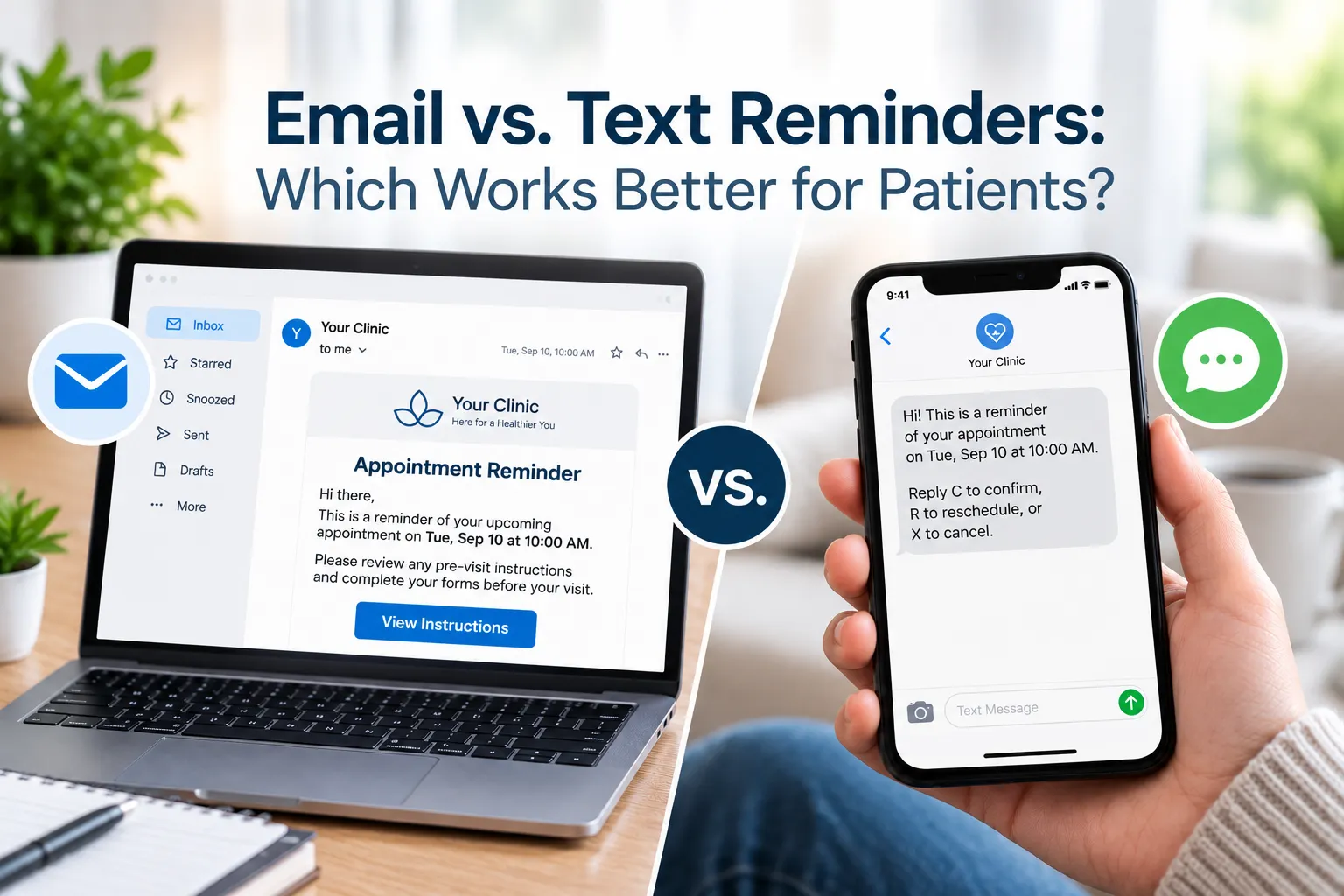
With two-way text messaging, your practice sends automated, HIPAA-compliant appointment reminders. Patients reply to confirm, cancel, or reschedule, and changes sync to your EHR. A patient who can't make Thursday can say so on Tuesday night.
Some patients would still rather call. The AI Voice Assistant answers 24/7 and handles routine requests like scheduling and appointment confirmations, so an after-hours call doesn't go to voicemail.
And when a missed visit never gets rebooked, Patient Recall reaches out to patients who are due or overdue for care before they drift away from your practice.
Want to bring your no-show rate down? Read our guide on how to reduce no-show appointments, or book a demo to see two-way texting in action.
Frequently Asked Questions
What does no-show mean at a doctor's practice?
It means a patient missed a scheduled appointment without canceling or giving the notice your policy requires, so the slot goes unused.
Is a late cancellation the same as a no-show?
Not exactly. A late cancellation means the patient gave some notice, just less than your policy requires, and many practices treat it like a no-show for fees while tracking it separately.
What is the best approach to handling patient cancellations?
Make canceling easy, ideally by text reply at any hour, and keep a waitlist to refill slots quickly. Share a clear cancellation policy at booking.
Do appointment reminders reduce no-shows?
They help most when patients can reply. A reminder that lets someone cancel or reschedule on the spot turns a likely no-show into a slot you can still fill.