What Is an AI Voice Assistant for Medical Practices? A Complete Guide

Pras S • July 28, 2026

Share this article

Every unanswered call at a medical practice is a missed opportunity - a patient who might book elsewhere, a frustrated caller, or lost revenue. Front desk staff are often juggling check-ins, phone lines, and paperwork. Something has to give. When callers are left on hold too long, many simply hang up and try another practice.


That’s where an AI voice assistant and agent can make a real difference. It handles incoming calls automatically, so your team never has to choose between the patient in front of them and the one calling in. This guide explains what it is, how it works, and what independent providers should look for when evaluating one.


What Is an AI Voice Assistant?

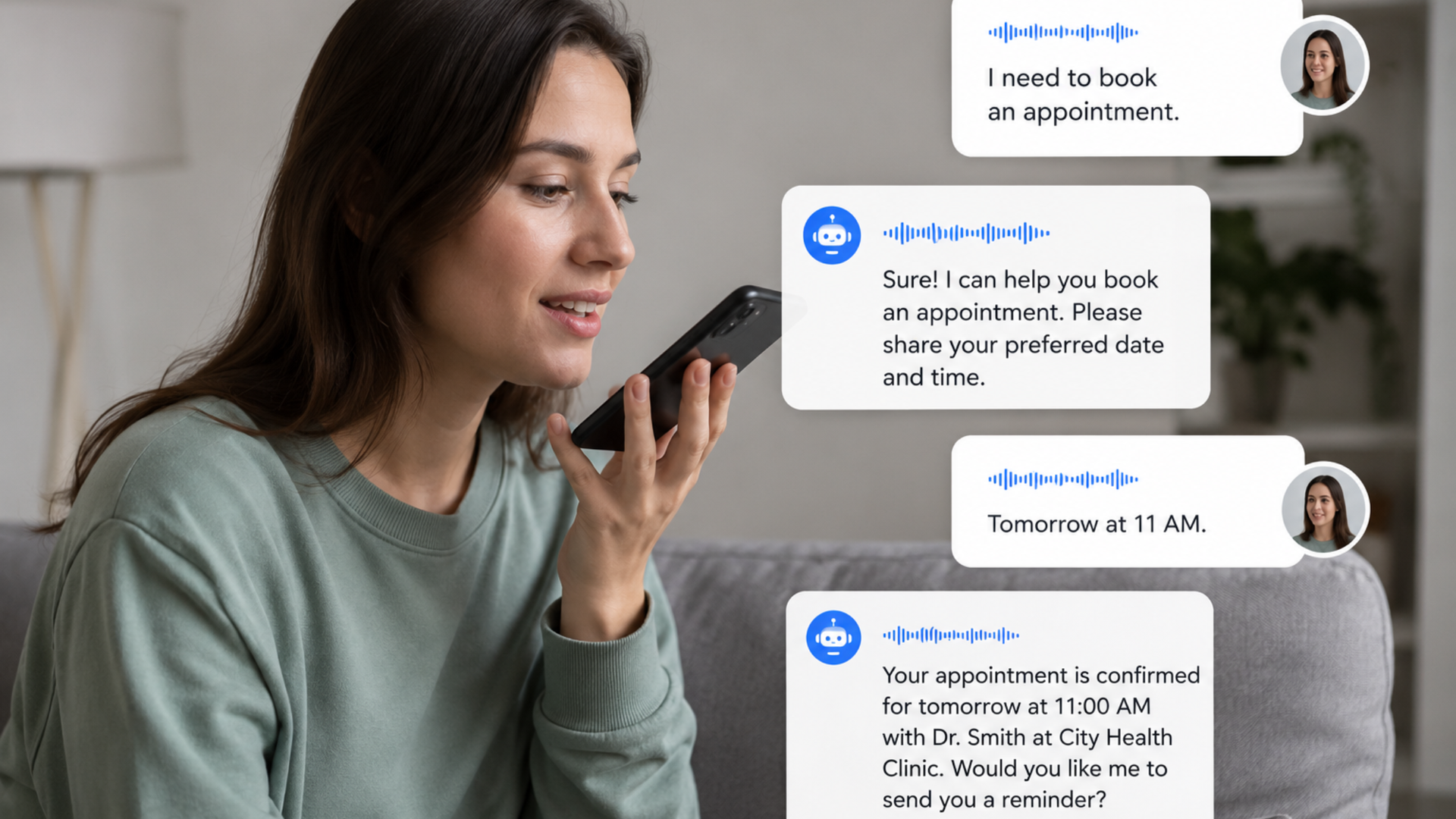
An AI voice assistant is software that answers phone calls, understands what the caller wants, and responds naturally - all without a human on the line. Instead of forcing callers through button-pressing menus, they can simply speak, and the system understands and replies in a conversational way, much like talking to a helpful receptionist.


It’s different from two things it often gets confused with:


  • Traditional IVR systems (phone trees): These rely on rigid menus like “Press 1 for appointments, press 2 for billing.” Callers frequently get stuck or frustrated.
  • Chatbots: These work great for website chats or text messages, but they don’t help the many patients who still prefer picking up the phone.


An AI voice assistant, often called a voice agent, is built specifically for voice calls on the phone lines patients already use. That’s why it feels like a practical way for providers to modernize without changing how patients reach out.


How It Works

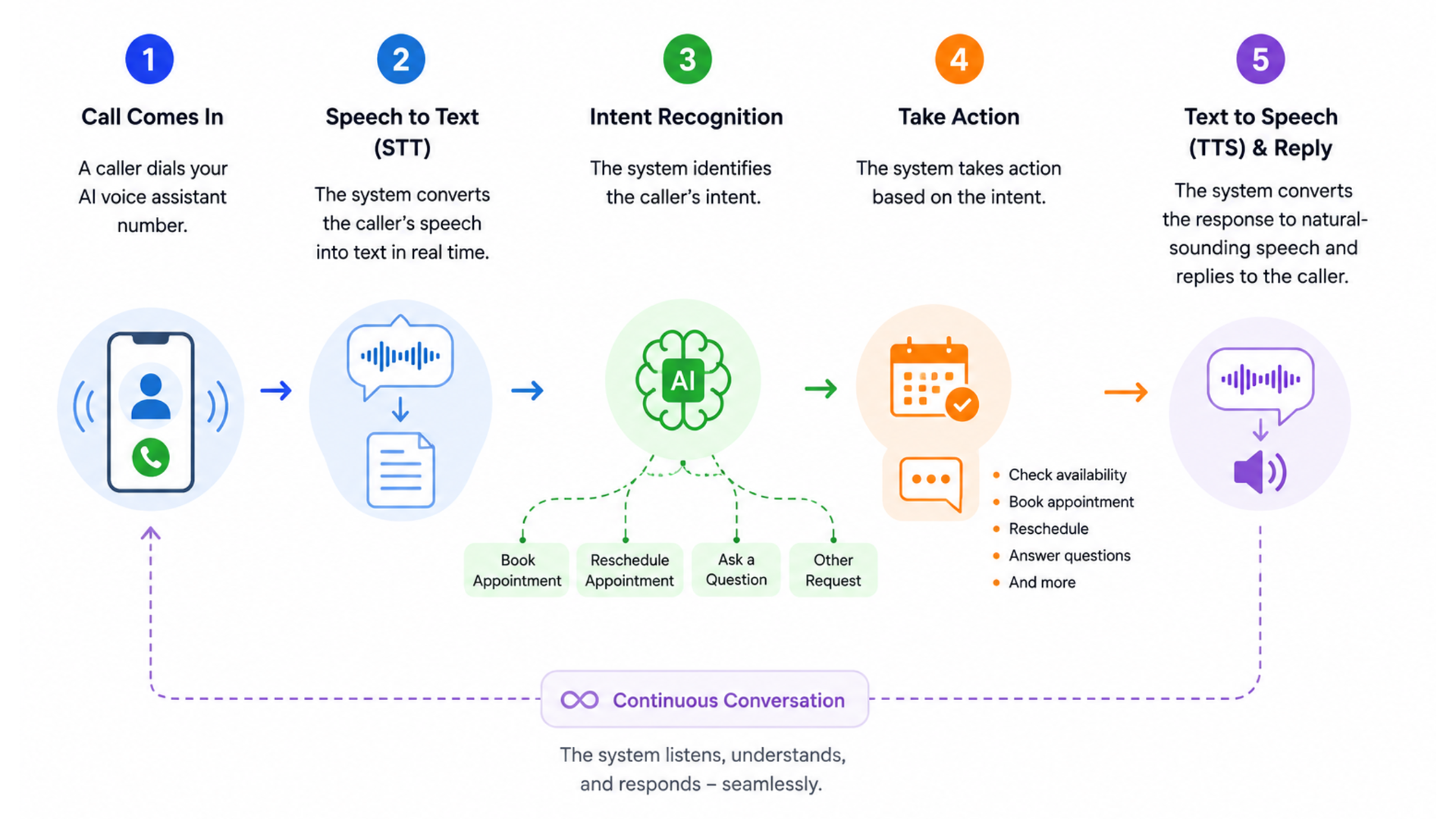
The process is straightforward:


  1. A call comes in.
  2. The system converts speech to text in real time.
  3. It figures out the caller’s intent - whether they want to book an appointment, reschedule, ask a question, or something else.
  4. It takes action, such as checking availability or answering the question.
  5. It converts the response back to natural-sounding speech and replies to the caller.


The real power kicks in when the agent connects to your existing systems, like your scheduling calendar or electronic health record (EHR). This integration lets the AI agent actually book or move appointments instead of just gathering information for staff to handle later. Without solid integrations, it’s basically a smarter answering machine.


Common Use Cases in Medical Practices


Independent providers often use AI voice agents for everyday needs like:


  • After-hours coverage: Calls outside office hours get answered instead of going straight to voicemail (where many patients won’t leave a message).
  • Appointment scheduling and rescheduling: Handled directly over the phone.
  • Answering common questions: Office hours, insurance details, directions, or prep instructions for visits.
  • Managing busy periods: Handling overflow when lines are tied up with in-office patients.
  • Reducing repetitive calls: Freeing up front desk staff for more complex or personal patient needs.


Key Benefits for Independent Practices


For smaller practices and providers, the advantages tend to be very practical:


  • Fewer missed calls, which means fewer lost patients and better revenue protection.
  • More staff time for in-person care, since routine phone work decreases.
  • A consistent, professional experience for every caller, no matter the time of day or how busy the office is.
  • Ability to handle growing call volume without immediately hiring more front desk staff.


What to Look for When Evaluating One

Not all AI voice agents are created equal, and the differences matter. When comparing options, pay close attention to:


  • Integration with your calendar and EHR: This determines whether the agent can take real actions (like booking appointments) or just provide information.
  • HIPAA compliance and data security: This is essential in healthcare. Look for vendors who offer a Business Associate Agreement (BAA), strong encryption, and clear policies around protected health information.
  • Customization: The ability to tailor the agent’s tone, responses, and scripts to match your practice’s voice and policies.
  • Reporting and analytics: Insights into call volume, common questions, and how many calls are resolved without staff involvement.


Always confirm these details directly with the vendor, as capabilities can vary quite a bit between platforms.


Conclusion


An AI voice assistant helps independent practices and providers answer every call - day or night - without adding to staff workload or forcing patients to change how they contact the office. If you're looking for a solution built specifically for practices like yours, SimpleChime's AI Voice Assistant is worth exploring. Visit SimpleChime today to see how it can help your practice capture more appointments and reduce missed calls.

Recent Posts

HIPAA-compliant texting apps
By Pras S July 31, 2026
Compare the best HIPAA-compliant texting apps for medical practices in 2026. Explore features, pricing, pros, cons, and choose the right software.
Patient communication software
By Pras S July 23, 2026
Looking for the best patient communication software? Compare the top healthcare communication platforms for texting, reminders, scheduling, and more in 2026.
Healthcare phone system
By Pras S July 20, 2026
Learn what a healthcare phone system is, how it works, its key features, benefits, and why modern cloud-based phone systems help improve patient communication and staff efficiency.
best strategies for increasing healthcare practice reviews
By Pras S July 16, 2026
Learn the best strategies for increasing healthcare practice reviews in 2026. Get more Google reviews, build trust, improve local SEO, and grow your practice.
two-way texting in healthcare
By Pras S July 15, 2026
Learn what two-way texting in healthcare is, how it works, its benefits, common uses, and why it helps improve patient communication and reduce missed visits.
two-way texting
By Pras S July 8, 2026
Discover 10 ways two-way texting improves patient satisfaction by simplifying communication, reducing no-shows, and creating better healthcare experiences.
UCaaS and CCaaS
By Pras S June 17, 2026
Learn why UCaaS and CCaaS are converging in SMB healthcare and improving patient access, scheduling, and communication.