
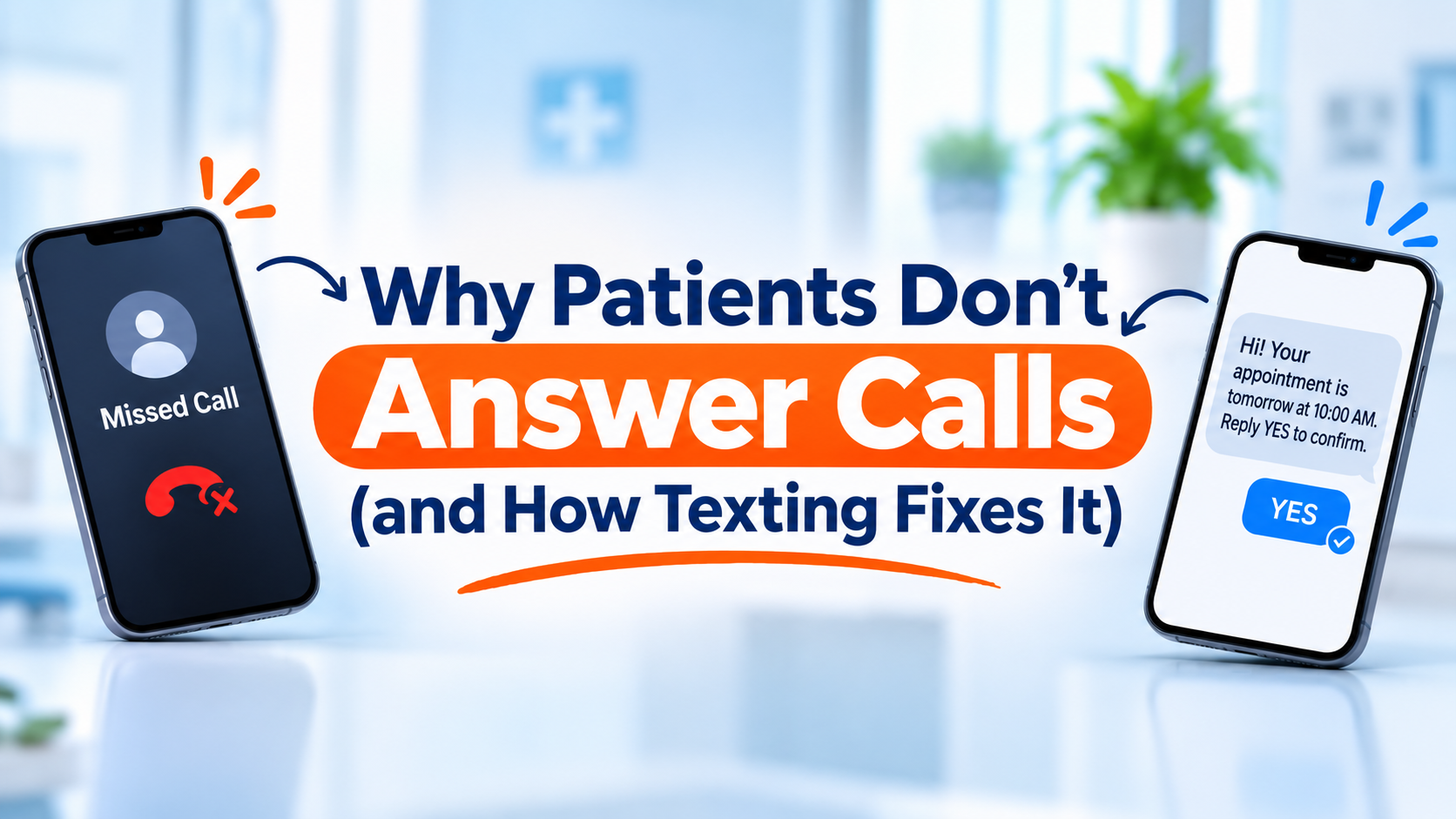
Best Mental Health Software for Patient Communication in 2027
• November 17, 2026

Mental health practices run on a weekly rhythm. When a reminder is missed, a patient can't get through on the phone, or a cancellation lands at 8 a.m., that 50-minute session is usually lost. Good therapy scheduling software is built to prevent that.
The gap is real. In a VA trial covering nearly 39,000 mental health appointments, mental health clinics missed 18.0% to 21.9% of visits, compared with 10.5% to 12.1% in primary care (Journal of General Internal Medicine).
Most scheduling software for therapists handles the calendar but not the texts, calls, and voicemails between sessions. Below, we compare 6 tools that do both, with features, pros, cons, pricing, and advice by practice type.
What Is Therapy Scheduling and Patient Communication Software?
Therapy scheduling and patient communication software lets patients book sessions online and lets the practice send reminders, text patients, and handle calls from one place. It's also called scheduling software for therapists or therapy appointment software.
It works alongside your EHR. The EHR holds clinical notes and billing, while the communication tool handles booking, reminders, texts, and calls and syncs appointments so staff doesn't enter data twice.
Why Mental Health Practices Need More Than Basic EHR Reminders
Mental health scheduling software has to cover what a one-way email reminder misses:
- Weekly cadence: a missed session can't be made up the next day.
- Discretion: reminders must confirm the time without naming the type of care.
- Text over phone: many patients find calling stressful.
- Calls during sessions: therapists can't pick up, so calls need routing or an answer.
- Late cancellations: open slots need filling within hours.
Key Features to Look For
1. Online Booking System for Therapists
Patient self-scheduling from your website, with real-time EHR availability and recurring sessions.
2. Therapy Appointment Reminder Software with Two-Way Confirmation
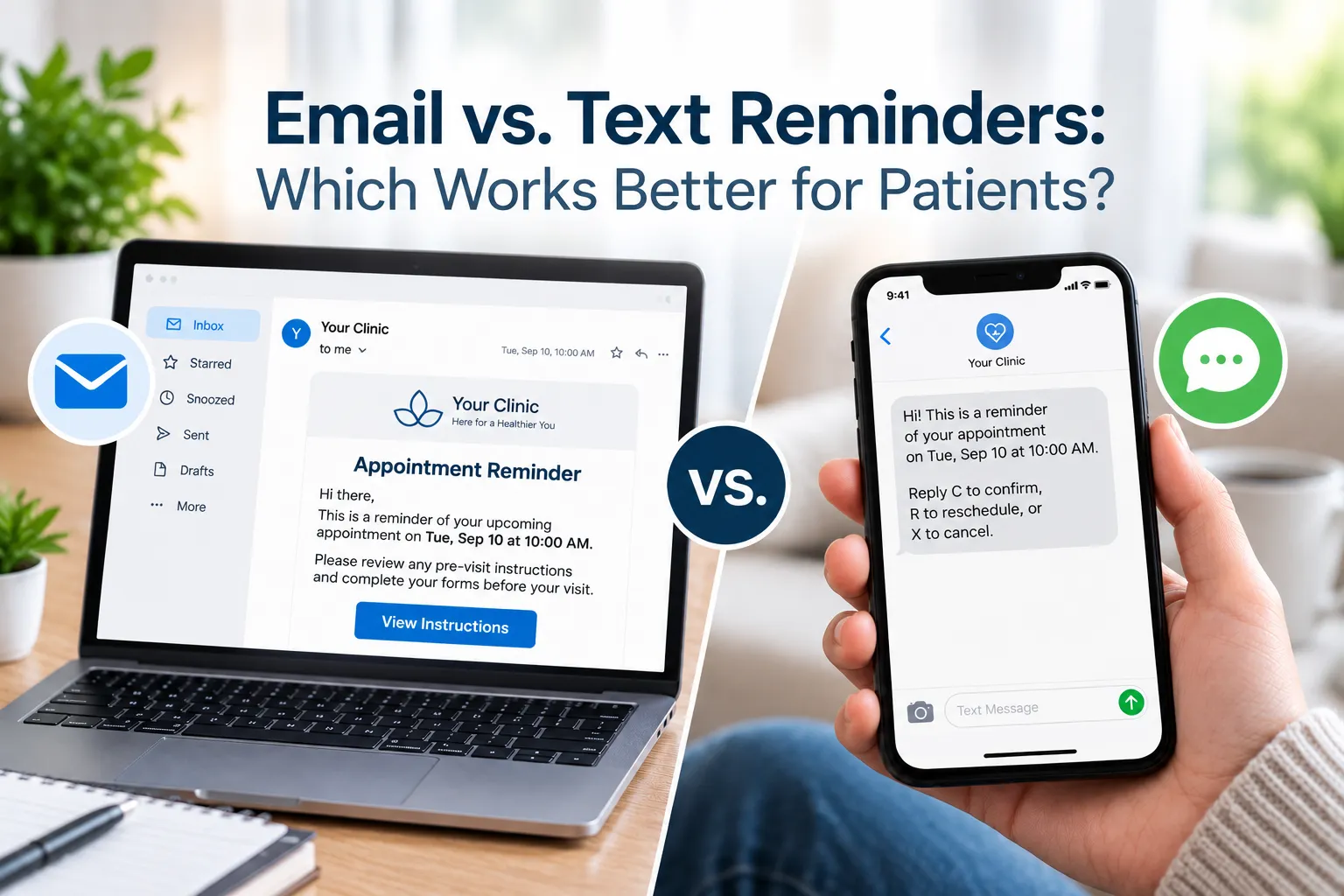
Patients reply to confirm, cancel, or reschedule, and the schedule updates so staff see open slots.
3. Mental Health Two-Way Texting Software
Texts from the practice number land in a shared inbox, with photo and document sharing.
4. Business Phone System and After-Hours Call Handling
An AI voice assistant answers routine calls, books appointments, and passes complex calls to staff.
5. Patient Recall for Lapsed Patients
Finds patients who haven't rebooked and sends a short, neutral check-in.
6. Messaging Software for Therapists and Staff
Team chat linked to patient records keeps handoffs off personal phones.
7. EHR Integration
Ask which EHRs sync today and whether the sync la dmc-mng.
8. HIPAA Compliance and a Signed BAA
The vendor should sign a Business Associate Agreement before you sign the contract.
Therapy Scheduling Software Comparison Table
We compared these patient software options for mental health practices using each vendor's public website, checked in November 2026.
| Software | Online scheduling | Reminders | Two-way texting | Phone system | AI voice | Public pricing |
|---|---|---|---|---|---|---|
| SimpleChime | Yes | Yes | Yes | Yes | Yes | Yes |
| Curogram | Not listed | Yes | Yes | Missed-call text only | Not listed | No |
| Emitrr | Yes | Yes | Yes | Yes | Yes | No |
| OhMD | Via AI agents | Yes | Yes | Yes | Yes | From $300/mo |
"Not listed" means we couldn't confirm it on the vendor's site. Disclosure: SimpleChime is our product.
Best Mental Health Patient Communication Software in 2027
1. SimpleChime

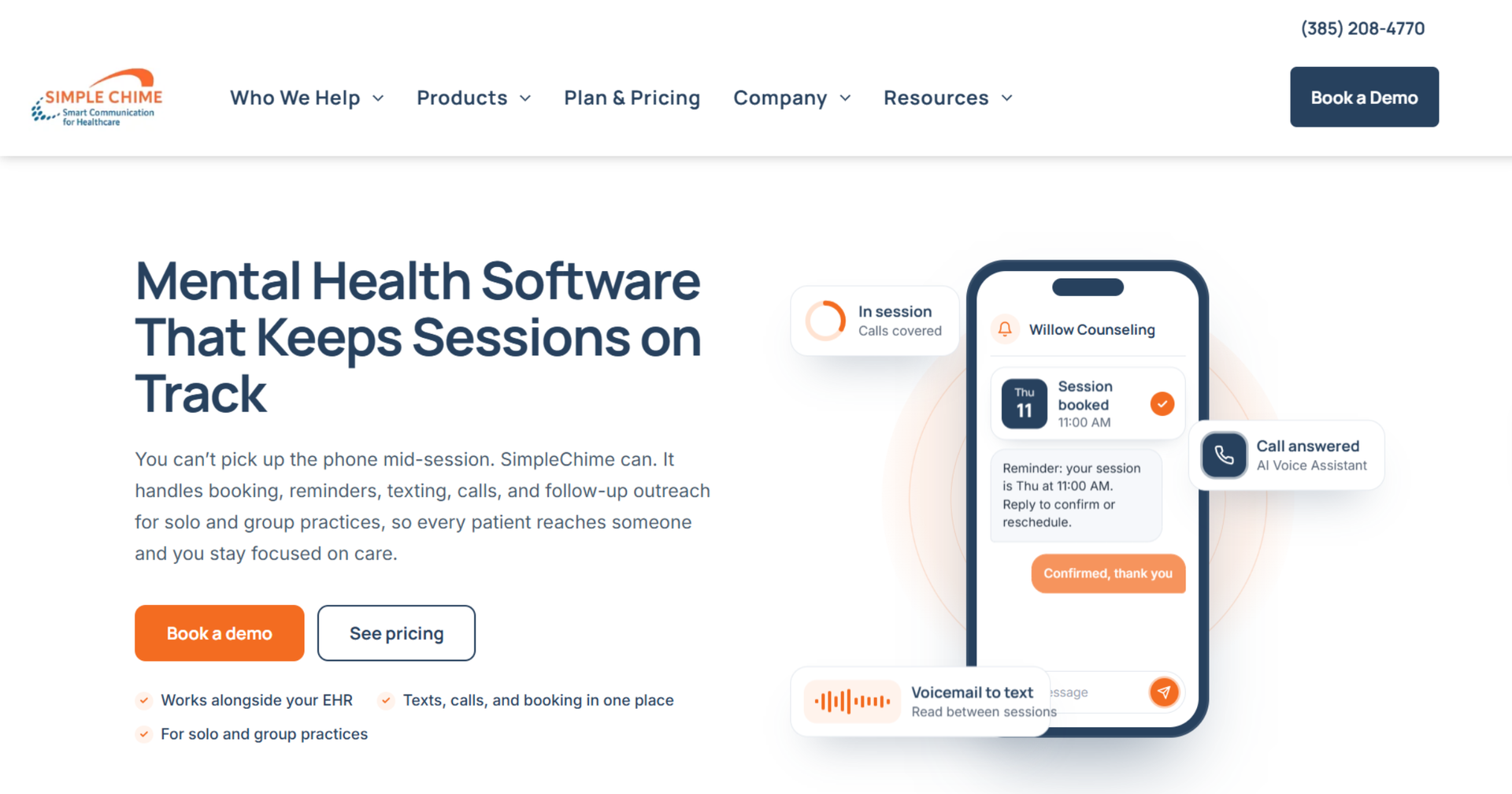
SimpleChime combines online scheduling, reminders, two-way texting, a business phone and an AI Voice Assistant for independent practices.
Why it's our top pick: It covers every step around a session, from booking and reminders to after-hours calls, without stitching tools together. Every product has published pricing, so practices can start with one and add the rest later.
Best for: Practices that want booking, texting, phone and AI call handling from one vendor.
Key features:
- Online scheduling for individual, group, and recurring sessions, with intake questions
- Text and email reminders with confirm and reschedule by text
- Shared texting inbox with file sharing, quick templates, and text-to-pay
- AI Voice Assistant that books from live EHR availability and transcribes voicemails
Pros:
- Booking, texting, phone and AI voice in one platform
- AI Voice Assistant books during the call and texts a confirmation right after
- Mix and match products instead of paying for a fixed bundle
Cons:
- Phone lines carry a one-time setup fee per number
- AI Voice Assistant minutes beyond the included 100 are billed per minute
Pricing (see plans):
| Plan | Price Range |
|---|---|
| Starter | $63 - $550 |
| Growth | $800 - $3,500 |
| Enterprise | $6,000 - $10,000 |
2. Curogram

Curogram adds texting, reminders, intake forms,ms and telehealth on top of a behavioral health EHR. It runs beside the EHR rather than replacing your phone system.
Best for: Practices on TherapyNotes, Valant, Welligent, Osmind, or Opus EHR.
Key features:
- Two-way texting from the practice's existing number
- Reminders by appointment type and provider
- PHQ-9 and GAD-7 intake forms synced to the EHR
- No-download telehealth and recall campaigns
Pros:
- BAA included with every plan, with 42 CFR Part 2 workflows supported
- Intake forms land in the EHR, so staff don't retype them
- Patients join telehealth from a text link, no app needed
Cons:
- No online self-scheduling or AI voice listed
- Phone features stop at missed-call and voicemail-to-text
- No published pricing
Pricing:
| Plan | Price |
|---|---|
| Published price | Not mentioned on site |
| Approximate | ~$125 to $400/mo |
3. Emitrr

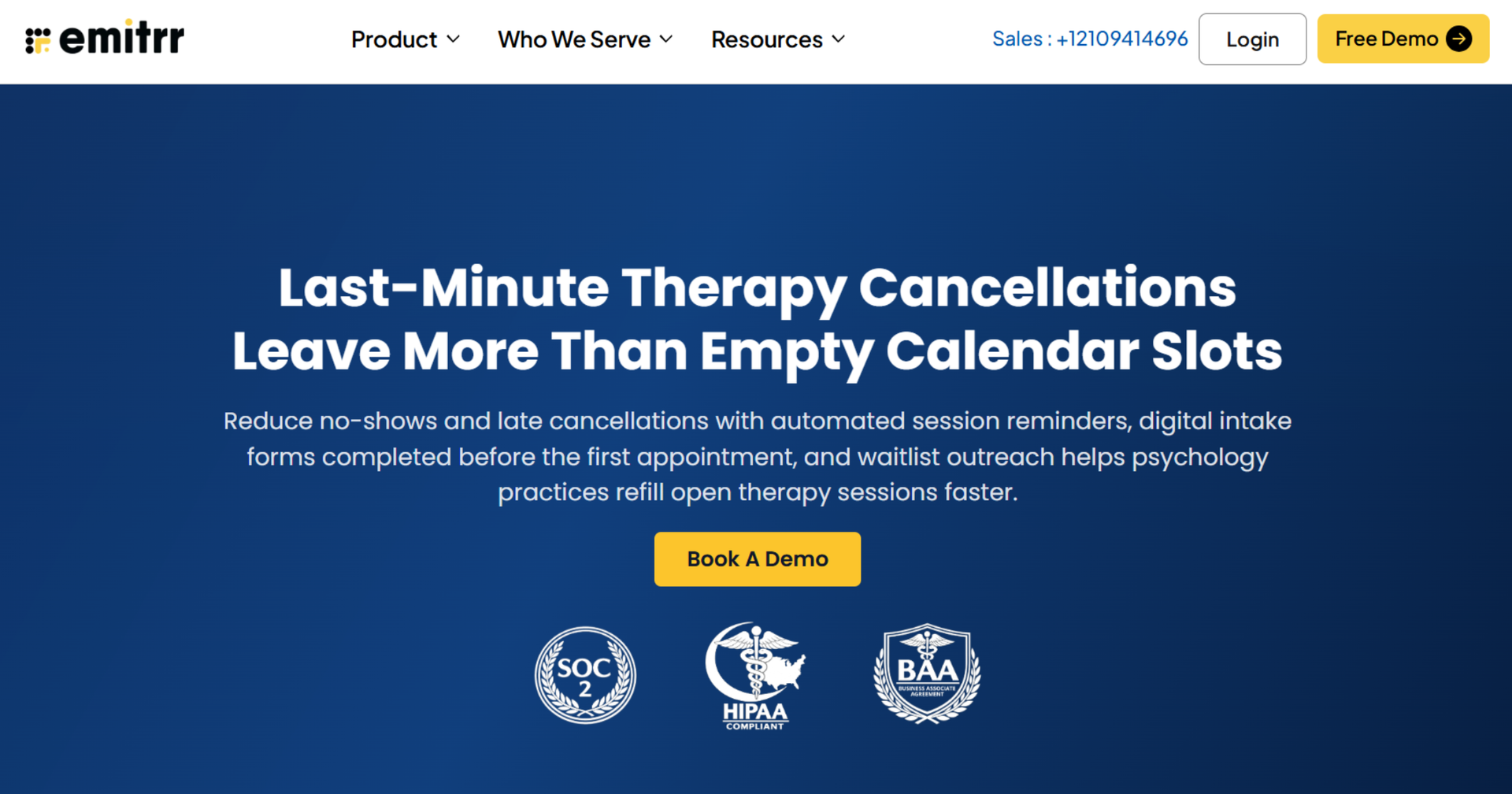
Emitrr offers texting, reminders, VoIP phones, and an AI agent. It has dedicated integration pages for several popular therapy EHRs.
Best for: Practices on TherapyNotes, BestNotes, InSync, or IntakeQ.
Key features:
- Session reminders with text confirmation
- PHQ-9 and GAD-7 intake forms before the first visit
- Waitlist outreach and check-ins when a patient goes quiet
- VoIP phone system and an AI agent for calls
Pros:
- Ready-made integrations for popular therapy EHRs
- Waitlist outreach helps refill late cancellations
- Texting, phone,s and AI available from one vendor
Cons:
- Built for many industries, not just healthcare
- Messaging, VoIP, and AI are sold as separate modules
- No public pricing page
Pricing:
| Plan | Price |
|---|---|
| Published price | Not mentioned |
4. OhMD

OhMD pairs two-way texting with AI agents that answer intake calls 24/7. Its behavioral health page focuses on converting intake calls and filling cancelled sessions.
Best for: Practices with high call volume.
Key features:
- AI agents that answer intake calls and confirm or reschedule recurring sessions
- Waitlist backfill after cancellations
- Outreach to patients who miss a session
- Text-enabled landline and voicemail transcription
Pros:
- 24/7 AI coverage for intake calls
- Fills cancelled sessions from the waitlist automatically
- BAA included in every agreement
Cons:
- Built mainly for physician practices
- Named integrations (athenahealth, ModMed, Veradigm) are medical EHRs
- AI features start at the $500/mo tier
Pricing (see pricing):
| Plan | Price |
|---|---|
| Core | From $300/mo |
| AI & Automation | From $500/mo |
| Enterprise | Custom Pricing |
How to Choose the Right Counseling Scheduling Software for Your Practice
Solo Therapists
Prioritize a business number, simple texting, and low cost.
Group Practices
Look for a shared inbox, routing by provider, and online booking that matches patients to clinicians.
Psychiatry and Medication Management
Choose reminders by appointment type, recall for follow-ups,s and after-hours call handling.
Questions to Ask in Every Demo
- Will you sign a BAA?
- Which EHRs sync today, and both ways?
- Can I edit the reminder wording?
- What happens to after-hours calls and texts?
- What's the total monthly cost for my team?
HIPAA and Privacy Tips for Texting Mental Health Patients
- Get a signed BAA from every vendor that handles patient information.
- Keep reminders neutral: date, time, and how to confirm, never the diagnosis or session type.
- Get consent to text at intake and record it.
- Text from the practice number, never a personal phone.
- Check 42 CFR Part 2 if you treat substance use disorders in a federally assisted program.
Conclusion
The right therapy scheduling software keeps weekly sessions filled and cuts phone tag. Match the tool to your practice size, EHR,R and call volume. SimpleChime brings booking, reminders, texting, phone, and AI voice into one mental health software platform.
Book a demo of SimpleChime to see how it fits your practice.
FAQs
What is the best therapy scheduling software for mental health practices?
It depends on your needs. SimpleChime (our product) covers booking, texting, phone, and AI voice together, while Spruce Health suits solo therapists on a budget.
Is texting patients HIPAA compliant for therapists?
It can be. Use a vendor that signs a BAA and encrypts messages, get patient consent, text from the practice number, and keep clinical details out of standard SMS.
Do I need separate scheduling software if my EHR already has it?
Not always. Add one when you need two-way texting, a business phone, after-hours call handling, or recall that your EHR doesn't offer.
How do automated appointment reminders for therapy practices work?
Therapy appointment reminder software reads sessions from your EHR and texts patients on a schedule you set. Patients reply to confirm or reschedule, and the schedule updates. A large VA trial found that nudge wording on mailed reminder letters didn't improve attendance, so easy two-way replies matter more than clever wording.
Make Patient Communication Easier
Connect with patients through texting, scheduling, and phone all in one place.